07 Aug 2026
Aluminium vs glass:
- Recycled aluminium uses up to 95% less energy than making new aluminium.¹
- Glass recycling only saves 30% energy compared to new glass.²
- Glass bottles are 7x heavier than aluminium.³
- 75% of aluminium ever made is still in use today² (it’s infinitely recyclable).
- smol aluminium bottles are made from 100% recycled aluminium
- Glass is still recyclable, but weight + transport emissions mean it can’t compete.
At smol, we’re packaging geeks.
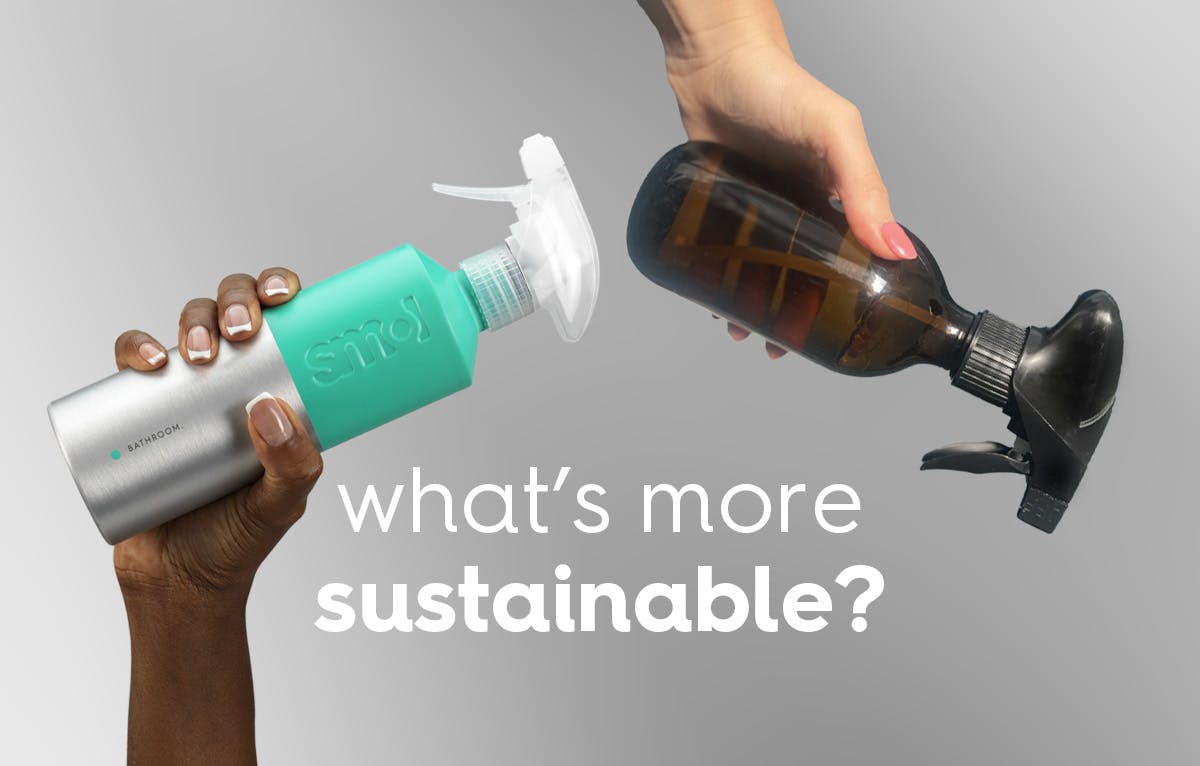
So of course we were bound to spend a LONG time weighing up (literally) the pros and cons of different materials before launching our 100% recycled aluminium bottles with impact.
Glass was a contender. But when you crunch the numbers, recycled aluminium simply cleans up from all angles.
It's one of the reasons you'll now find recycled aluminium bottles across our growing range, from everyday cleaning heroes to our beautifully scented Clean Reset collection. Surface Reset, Bathroom Reset and Floor Reset all come in aluminium bottles-for-life, paired with tiny concentrated refills in aluminium bottles too.

Carbon footprints.
- Producing a glass bottle leaves a much bigger footprint. One study found that a 340g glass bottle has over 6x the carbon footprint of a slightly larger 454g aluminium can.³
- Recycling aluminium saves a whopping 95% of the energy it takes to make new aluminium.¹
- Recycling glass? It’s helpful, but it only saves 30% of the energy compared to creating brand new glass.²
In one life-cycle comparison, glass bottles produced about 95% more global warming impact than aluminium cans.⁴
Transportation.
Glass is heavy. A 1 litre glass bottle can weigh up to 800g.²
Aluminium? Much lighter, reducing transport fuel use and emissions.
Less weight means less CO₂ belched into the atmosphere.
Staying in the loop.
Aluminium is pretty much the poster child for keeping things in the loop.
It’s infinitely recyclable and it never loses quality (no matter how many times you recycle it).
Fun fact: 75% of all aluminium ever made is still in use today.³
Of course it’s true that glass can also be recycled endlessly, but it has its drawbacks. Firstly, it needs sorting by colour before it can be recycled (a labour intensive and costly process), but secondly, glass is really easily contaminated, and its sheer weight adds extra cost and emissions to the loop.

Why we chose recycled aluminium.
- Recycled aluminium bottles slash energy use by up to 95%.
- They’re so lightweight they keep transport emissions low.
- Being infinitely recyclable means aluminium keeps going forever.
- Let’s face it, aluminium also looks really good!
That's why we chose recycled aluminium for the bottles-for-life and concentrate refills in our Clean Reset Collection too. The result is beautifully designed cleaning products that look incredible and make smart use of materials.

And what about our recycled PET plastic bottles-for-life?
They’re not going anywhere at the mo…
Recycled PET has a carbon footprint that’s very similar to aluminium, and of course it’s much lighter than glass. Our recycled and refillable plastic bottles-for-life have saved us thousands and thousands of tonnes of virgin plastic. Lovely.
Main takeaways.
When it comes to real-world sustainability, recycled aluminium wins every time over glass.
It’s lighter to ship, easier to recycle, and drastically far less energy to recycle.
Add to that, the fact we’re using 100% recycled aluminium, and you’ve got a bottle with real staying power, that’s also so much lighter on the planet.
Aluminium vs glass FAQs.
¹ International Aluminium Institute, 2024
² Greenmatch, 2024
³ Allure Report on Packaging, 2022
⁴ Alliance to End Plastic Waste, 2023

Catherine Green, Cleaning Expert
Catherine has been on a mission to revolutionise the way we tackle chores since the dawn of smol and is an advocate for making more sustainable living accessible to all, with a strong focus in cleaning that’s heavy on dirt, lighter on the planet and gentle on the skin. Catherine has tested hundreds of hacks to make tackling chores easier, safer, and better for the planet and our homes.
ABOUT OUR AUTHORS