10 Apr 2026
Cleaning an oven without chemicals cheat sheet:
- Everything is made of chemicals (even water and bicarbonate of soda). But many people search for ways to clean without harsh commercial cleaners.
- Bicarbonate of soda is a popular natural oven cleaner for lifting grease and burnt-on food.
- Leave the paste to sit for several hours or overnight so it can break down grime.
- Use vinegar or warm water to wipe away residue afterwards.
- For tougher marks, a smol dishwasher tablet and warm water can help shift stubborn grease.
Ovens are an essential part of everyday cooking but they also have a habit of becoming caves of carbon chaos.
So if you’ve ever opened the oven and thought “Where do I start?” you’re not alone.
What does “cleaning without chemicals” mean?
People often want to know how to clean an oven without chemicals. Whereas what they really mean is how can they avoid strong, harsh commercial oven cleaners. Because here’s the slightly nerdy truth:
Everything is a chemical. Water, vinegar, even “natural” cleaning ingredients are chemicals.
But that doesn’t mean you need an industrial-strength oven cleaner to tackle grease. Alternatives include:
- Bicarbonate of soda
- Vinegar
- Lemon
They can all help loosen grease and burnt residue.
How to clean your oven with bicarbonate of soda.
Bicarbonate of soda is one of the most common natural oven cleaning methods and the reason it works well is because it’s mildly alkaline, which helps break down greasy deposits.
What you’ll need:
Step-by-step oven cleaning method.
- Remove oven racks and trays so you can reach all the inner surfaces.
- Make a thick paste from bicarbonate of soda and a small amount of water.
- Spread the paste inside the oven, avoiding the heating elements.
- Leave it to work for at least 6 hours (or overnight).
- Wipe away the residue with a damp cloth or sponge to remove the paste and grime.
- Spray vinegar if needed to help fizz away any remaining bicarbonate of soda.
- Finish with a final wipe down using warm water and a clean cloth.
Cleaning oven racks naturally.
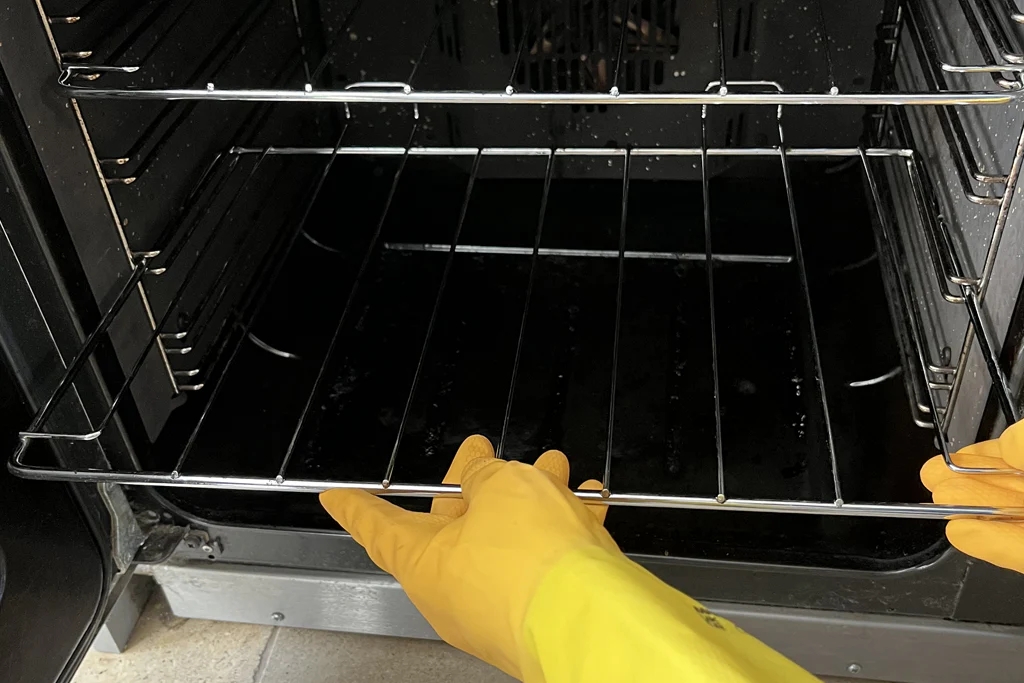
While the oven itself is left to soak, you can tackle the racks.
- Place racks in a sink or bath and cover with warm water.
- Add a few tablespoons of bicarbonate of soda.
- Leave to soak before scrubbing.

When a dishwasher tablet works better.
Sometimes oven grease has been baked on for months (or… years) and in those cases bicarbonate alone may struggle.
A simple trick is using a smol dishwasher tablet with warm water. Dishwasher tablets are designed to tackle burnt-on food at high temperatures, so they can be very effective at shifting oven grime. You can discover how to clean an oven with a dishwasher tablet here.
Tips to keep your oven cleaner for longer.
Between cleans, a few small habits can help prevent the dreaded baked-on buildup:
- Wipe spills quickly once the oven has cooled
- Use baking trays under messy dishes
- Clean the oven door glass regularly
- Do a light clean every few weeks
To conclude…
If you’re searching for how to clean an oven without chemicals, it’s going to be tough because as mentioned… everything is a chemical.
But if your goal is to avoid strong commercial cleaners, simple ingredients like bicarbonate of soda and smol dishwasher tablets can still do a good job.
Cleaning ovens with natural ingredients FAQs.

Catherine Green, Cleaning Expert
Catherine has been on a mission to revolutionise the way we tackle chores since the dawn of smol and is an advocate for making more sustainable living accessible to all, with a strong focus in cleaning that’s heavy on dirt, lighter on the planet and gentle on the skin. Catherine has tested hundreds of hacks to make tackling chores easier, safer, and better for the planet and our homes.
ABOUT OUR AUTHORS