06 Oct 2026
- Everything is made of chemicals.
- Being “chemical-free” is scientifically impossible.
- Words like “non-toxic”, “natural” and “eco-friendly” need context.
- More of an ingredient does not automatically mean more cleaning power.
- smol uses 34% less chemicals, on average, across 11 core products compared to selected leading brands, measured using dry matter testing.¹
In a recent survey, smol research found 40% of Brits have a negative reaction to the word “chemical” on a label, while 40% say they’ve paid more for a cleaning product claiming to be “chemical-free”.¹
This is where things get awkward because “chemical-free” cleaning is scientifically impossible.
“Chemical-free” doesn’t exist.
Water is a chemical. Oxygen is a chemical. You yourself are made from chemicals (about 60 if you’re asking).
Yet nearly two-thirds of people surveyed (61%) believe “chemical-free” means a product contains absolutely no chemicals, while 41% don’t think water is one.

No wonder people are confused when it comes to cleaning products.
So let’s dispel the fear, make labels make sense and flag which cleaning claims tell you something worth knowing.
Cleaning claims: what do they tell you?
Our research found 68% of Brits think cleaning products use language that makes them difficult to compare on shelf. We can see why. So here’s a useful guide.
The claim | What it tells you | What to ask instead |
|---|---|---|
Chemical-free | Nothing. Everything in it is chemicals. | What ingredients are used and why? |
Not a defined UK cleaning standard or any guarantee of zero risk. Anything can be toxic at the wrong dose, even water | Why is a product making this claim? All UK cleaning products are non-toxic when used as directed. | |
Natural or plant-based | Where something came from. Not whether it is safer, lower in impact or how much is “natural’. | What makes this ‘natural’ and how is that claim substantiated? |
An undefined standard with no agreed method of measurement. | What makes it ‘eco-friendly’? Less plastic than what? Lower carbon than what? Is there a Life Cycle Analysis? | |
Dermatologically tested | A product underwent some skin-related testing, but it doesn't say how extensive the testing was. | Who did the testing, how was it done and what does it mean? |
Can be useful, if you know how it’s been measured and what the product is being compared to. | Less by what measure? Per dose? Compared with which product? |
This all goes to highlight how much is put on the customer as they try to navigate their way around labels, advertising and supermarket shelves. When a phrase has no agreed-upon definition, brands have free rein to say whatever they fancy. We think marketing claims should be truthful, clear, and backed-up.
Natural doesn't always mean safer.
Nature is awesome, that’s a given. And 47% of people in our survey said they had paid more for a product simply because it carried the word “natural”.
But natural does not automatically mean harmless, just as synthetic does not automatically mean harmful. What matters is the stuff itself, how much is present and how you're going to be exposed to it.

38% of Brits think “dermatologically tested” has a legal definition. It doesn’t.
Over one third of people in our survey thought “dermatologically tested” had a legal definition in the UK. It doesn't.
So when you see the phrase, also ask for the evidence behind it.
At smol, where we make dermatologically tested claims, it means a product has been patch tested via an independent external laboratory following standard industry testing protocols which found the product to be non-irritating. All our Sensitive range products are dermatologically tested and also separately accredited by The Skin Health Alliance: a global, independent, leading accreditation body that promotes skin health education and ensures products meet the highest scientific standards of skin safety.
Do higher doses mean a better clean?
Cleaning performance comes from getting the right ingredients together in the right amounts.
A larger dose often contains more chemical matter without giving better results. Foam is a good example. Bubbles look busy, but in laundry they aren’t what’s doing the cleaning. Yet many brands add foam boosters to their formulas to give the look of a deep clean.
42% of Brits still think cleaning products with lower doses of ingredients aren’t as effective as products with higher doses. Which brings us to the thing smol measures instead.

Chemical dry matter testing.
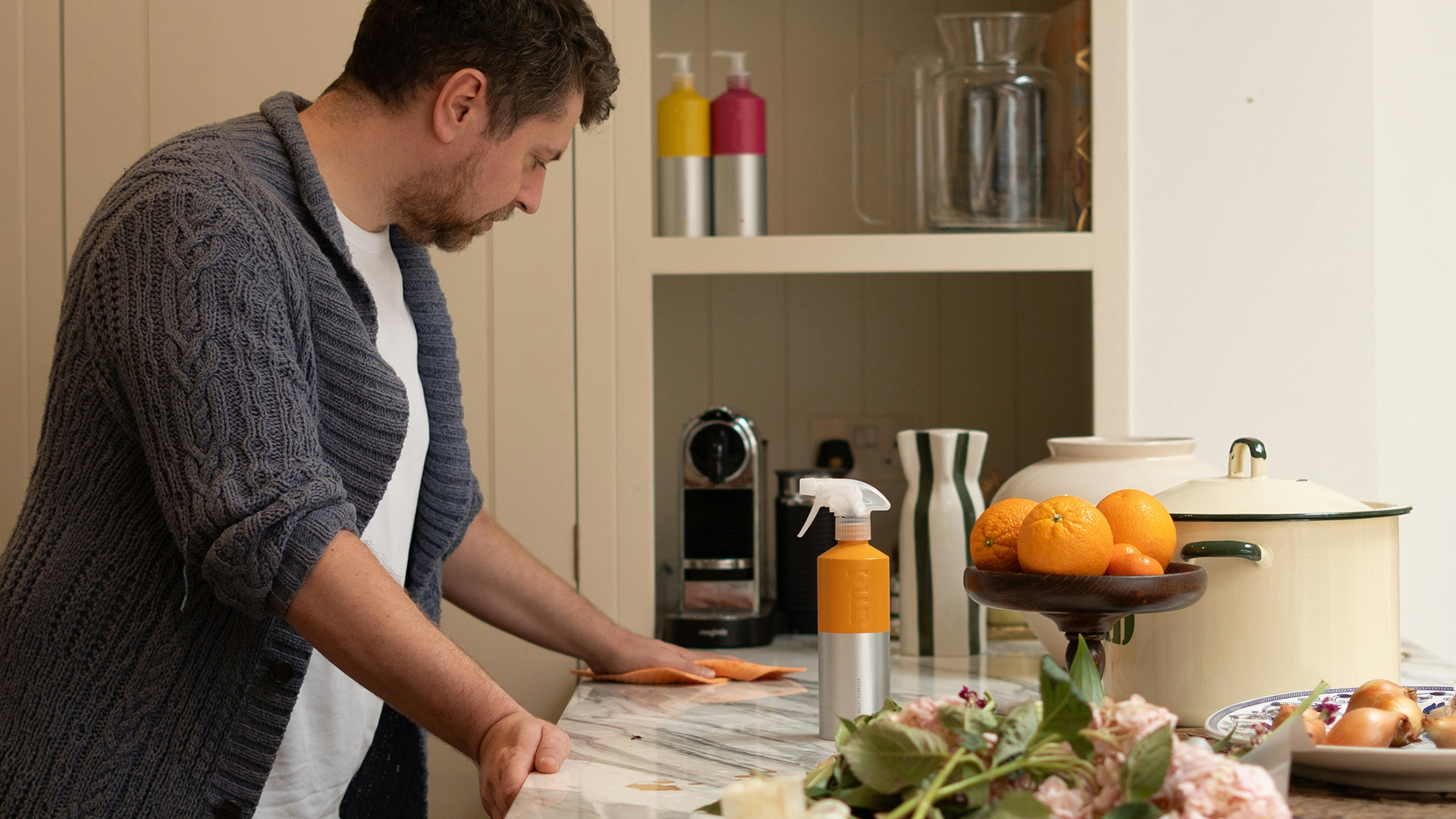
Chemical dry matter testing sounds complex but it's actually pretty simple.
We take a recommended dose of a cleaning product and remove the water and fragrance. What is left behind allows us to compare the amount of cleaning chemical matter being used dose for dose.
Across 11 smol core products, testing found smol uses 34% less chemicals on average than selected leading brands.²
A cleaning product does still need to clean so we always start with performance. But then we work on only using what is necessary. Because more isn't automatically better.
And we focus on measurable comparisons like the chemical dry matter testing instead of claiming to make products made from “not chemicals”.
What is cleanwashing? How to spot misleading cleaning claims.
Cleanwashing happens when a brand uses vague, reassuring or science-sounding cleaning claims that make their product seem safer or better than the evidence actually shows.
Think “chemical-free”, “non-toxic”, “natural” or “eco-friendly” with little explanation of what those words really mean.
When a cleaning claim sounds impressive, look for what comes after it.
Compared with what? How was it measured? How much less or more? Who did the testing? What does “natural” refer to? What makes it “better for the planet”?
The more specific the answer, the more helpful the claim.
Everything is a chemical.
In everyday speech, it can feel like the word chemical is shorthand for “bad ingredients". When, scientifically, it simply isn't.
As Mark Lorch, biochemist and Professor of Science Communication at the University of Hull, puts it:
“Everything is a chemical.”
What’s important to realise is that a chemical-free cleaning product isn’t possible. A bottle of “no chemicals” is a vacuum.
Much better to ask which chemicals are being used, whether they are all necessary and how much of them we are using.
FAQs: chemicals and cleaning claims.
¹ Consumer research commissioned by smol through Censuswide among a nationally representative sample of 2,000 UK adults in August 2026. Censuswide is a member of the Market Research Society.
² see smol.com/our-claims

Kathleen Bell, R&D Technical Manager
Kathleen is one of smol’s resident chemistry brains. She’s been working in sustainable cleaning since completing her Master’s degree in Chemistry in 2017, and now spends her days finding the just-right combination of ingredients to make smol products work brilliantly while keeping their impact lighter.
ABOUT OUR AUTHORS