30 Mar 2026
Composting or recycling cheat sheet:
- Recycle cardboard if it’s clean and dry.
- Compost cardboard if it’s dirty or wet and can’t be recycled.
- Only compost plain cardboard (no plastic laminate or glossy coatings).
- Remove tape, labels and plastic windows first.
- Shred or tear cardboard to help it break down faster in compost.
- smol packs are plastic-free cardboard, so they can be recycled or composted.

Over 70 million tonnes of cardboard are produced each year worldwide!
And whilst that’s nowhere near the 380 million tonnes¹ of plastic the world also creates each year - it’s still a LOT of waste to sort out.
Of course, cardboard is one of the main packaging materials around and it’s often discarded after just one use making it yet another single-use item. And with the UK creating the most cardboard waste in Europe (over 5 million tonnes each year²), it’s all got to go somewhere.
So what are our choices?
If we don’t want to fill up landfill with cardboard… should we recycle it or compost it down?
The more sustainable path.
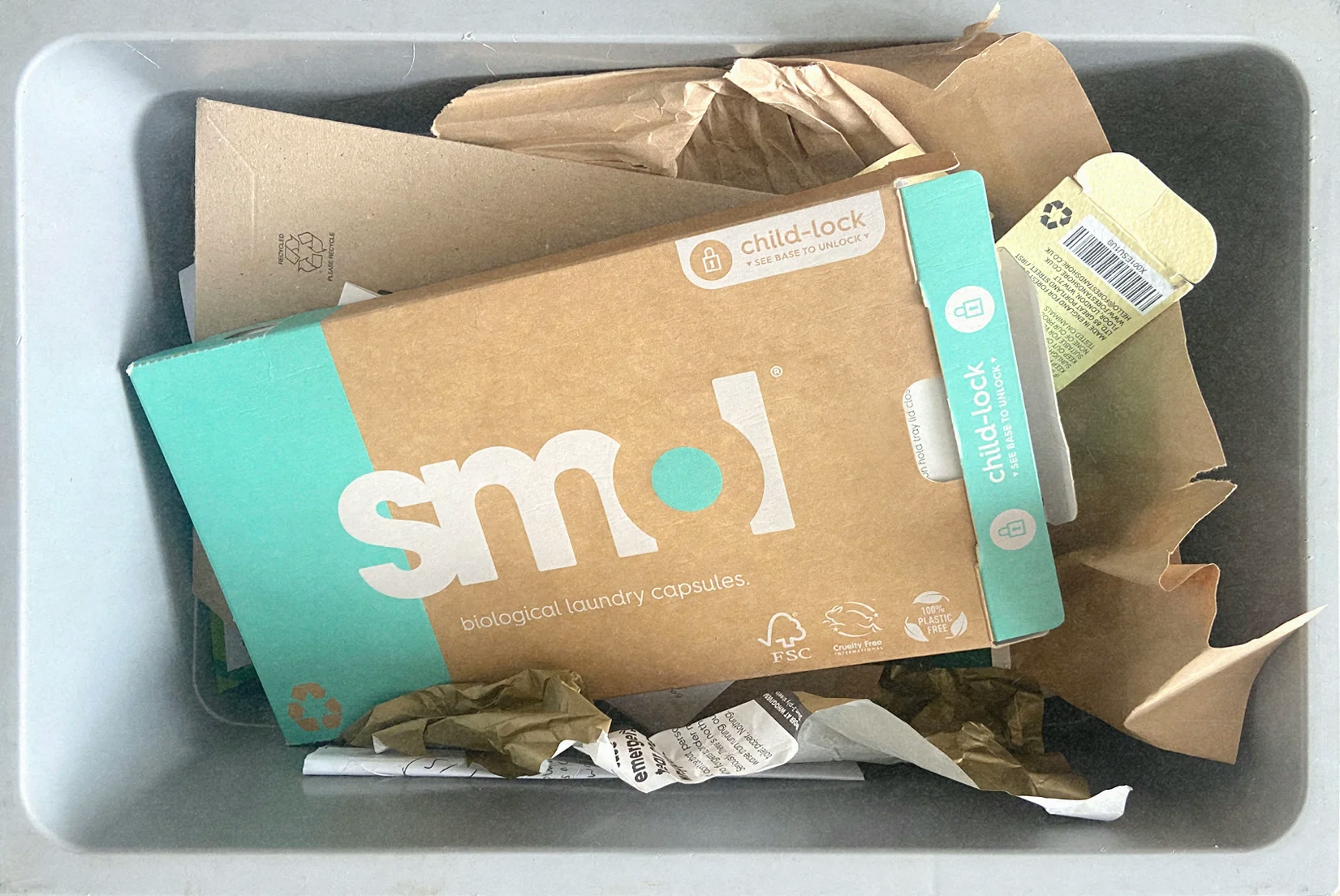
Cardboard recycling.
On the whole… if our cardboard is clean, we should be recycling it.
- Creating cardboard from recycled material uses 25% less energy than when making new card.²
- Every tonne of cardboard recycled saves 7k tonnes of water, 4k kW of electricity and 9 cubic yards of landfill space.²
- Cardboard can be recycled up to 7 times before its fibres are too short to be processed again.
- Recycling cuts the constant demand to fell more trees.
Pretty much any cardboard is suitable for recycling, you just need to make sure it’s clean and free from contaminants. If it’s covered in food residue, grease or glitter then unfortunately it won’t be recycled.
Remember, it’s important NOT to “wishcycle”.
This is where we wrongly think our cardboard (or other items) are recyclable when they are not. Contaminated or incorrect items in your recycling can spoil the entire load, meaning none of your items get recycled at all and they will be burnt or go off to landfill.
Cardboard composting.
If our cardboard is dirty or wet then composting can be a very eco-friendly solution for its end of life and is preferable to it going to landfill or being burnt.
- Composting needs no electricity or water in order to take place.
- There’s no polluting transportation involved in compost… it’s just a short walk up the garden path!
- Cardboard can be an important addition to a compost and can help create a rich humus.
- When it’s spread throughout the heap, cardboard soaks up excess moisture and improves airflow. This actually helps speed up the rotting down of everything else!
Important checks.
When adding cardboard to your compost - be sure to remove plastic tape or labels.
Shredded card works best but it’s fine to simply rip it up or cut it up into small pieces instead. And soaking it with a little water will also help speed up its decomposition.
Big brands that pack their laundry capsules in cardboard still laminate their card with plastic, so DO NOT add this type of cardboard to your compost. When it breaks down you will be adding microplastic residue to your soil.
N.B. smol Laundry Capsules and Dishwasher Tablets come in 100% plastic-free cardboard so you can most definitely compost our packs with a clear conscience.
So in conclusion…
…are we recycling or composting?
If our cardboard is dry and clean let’s continue it’s life and pop it in the recycling.
If it’s dirty or wet, then feel free to compost (providing it’s not plastic laminated!).
Remember, smol’s Laundry Capsules and Dishwasher Tablets come in fully recyclable cardboard (or compostable if you need to) and our carton refills are also 100% recyclable. Why not dip your toes into planet friendlier cleaning with our brilliant Most-Loved Switches Bundle? It’s a one-and-done swap to the refill revolution.
Composting or Recycling Cardboard FAQs.
Can cardboard go in compost?
Yes, plain cardboard can compost very well. It’s considered a “brown” compost material, which means it adds carbon and helps balance wetter compost ingredients like fruit and vegetable scraps.
What cardboard should not be composted?
Avoid composting cardboard that is:
- plastic laminated
- glossy coated
- covered in tape or plastic labels
- printed with metallic inks or glitter
These materials won’t break down properly.
Is recycling cardboard better than composting it?
In most cases, recycling is the best option for clean cardboard because the fibres can be reused to make new packaging. Composting is a good alternative when cardboard can’t be recycled due to contamination.
Can greasy cardboard be recycled?
Usually not. Food residue and grease contaminate recycling. If the cardboard is plain and plastic-free, it can often be composted instead.
How long does cardboard take to compost?
Shredded cardboard can break down in a few months, depending on moisture levels, temperature and how often the compost pile is turned.
¹ plasticoceans.org
² businesswaste.co.uk

Catherine Green, Cleaning Expert
Catherine has been on a mission to revolutionise the way we tackle chores since the dawn of smol and is an advocate for making more sustainable living accessible to all, with a strong focus in cleaning that’s heavy on dirt, lighter on the planet and gentle on the skin. Catherine has tested hundreds of hacks to make tackling chores easier, safer, and better for the planet and our homes.
ABOUT OUR AUTHORS