26 Jun 2026
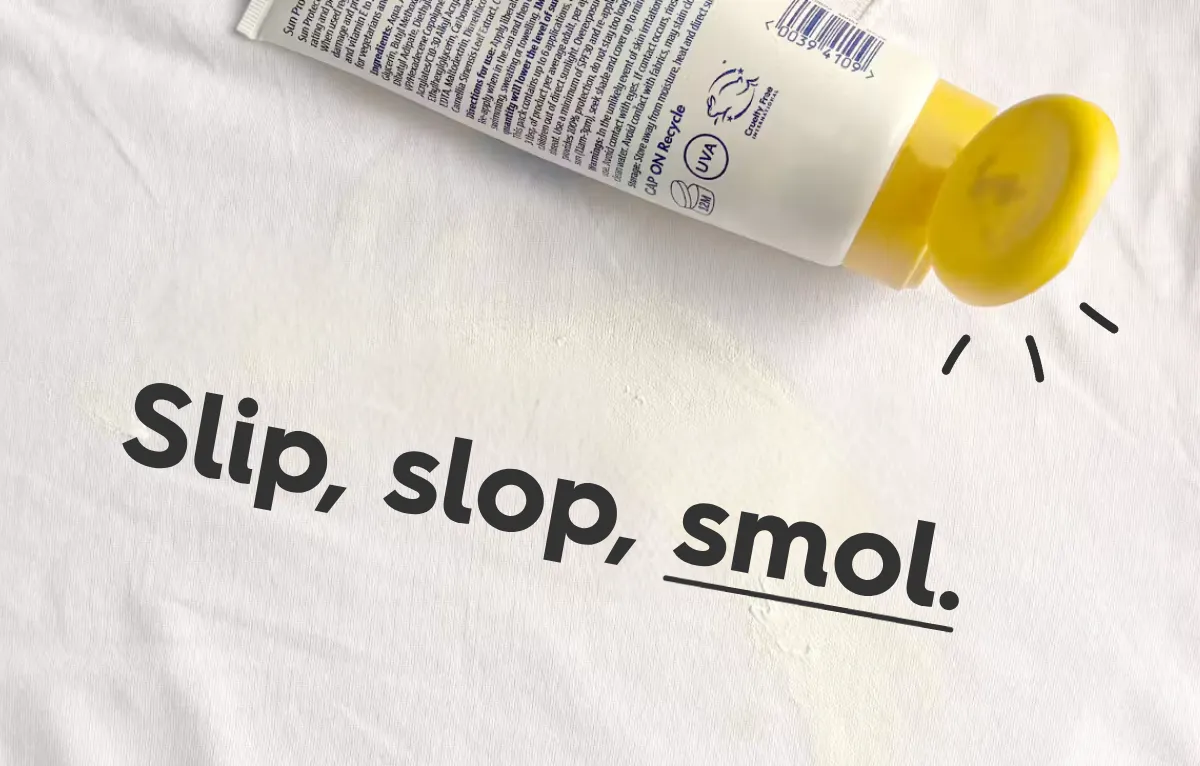
smol sunscreen stain cheat sheet:
- Suncream can stain clothes, towels and swimwear.
- Yellow sunscreen stains are often caused by avobenzone reacting with minerals in water.
- Fresh stains are easier to remove than older marks that have set in.
- Always rinse and pre-treat before washing.
- Wash at 20°C or 30°C and avoid tumble drying until the stain has completely gone.
- smol stain gel helps tackle oily sunscreen marks without bleach.
Sunscreen’s for your skin. Not your clothes. Yet it often ends up on both.
And sadly sunscreen stains are sneaky. You might not spot them until after a wash, especially on light fabrics like white clothes.
But don’t worry because we’ve got your SPF-protected back. Here’s how to remove sunscreen stains the easy way.
But first… why does sunscreen stain clothes?
Many sun creams contain oils or moisturising ingredients and also UV filters that are designed to stick around on your skin in order to do their job. Unfortunately, they also cling to fabrics.
One ingredient linked to yellow sunscreen stains is something called avobenzone. When avobenzone comes into contact with the minerals found in hard water (particularly iron) it can create yellow or orange marks on our clothes.
White and light-coloured clothing, towels and swimwear, all tend to show these stains most clearly, but even darker fabrics can develop greasy patches over time.
The most frustrating part? You may not notice the stain straight away. Often, sunscreen residue only becomes visible after the item has actually been washed and dried.
What you’ll need:
- Cold running water
- smol Stain Gel (enzyme-powered, bleach-free, refillable)
- An old clean toothbrush
- A bowl of white vinegar and water (optional for soaking)
- smol Laundry Capsules or Laundry Liquid
- A clean cloth.
How to get yellow sun cream stains out of white clothes.
Step 1: a cold rinse.
- Turn the item inside out and rinse under cold running water.
- Blot with clean cloth (don’t rub).
- This helps flush out oily residue before it sets.
Step 2: pre-treat with smol Stain Gel.
- Apply 4 pumps directly to the stain.
- Rub gently into the stain, using a soft clean toothbrush.
- Leave it for 5 to 10 mins to let the enzymes work.
step 3: wash.
- Pop the stained item in your machine with a smol Capsule or Liquid (bio works best).
- Choose a cooler 20°C or 30°C cycle (heat can set the stain).
- Skip the fabric conditioner this time (it can coat fibres and trap residue)
Step 4: check before drying.
- Don’t dry your clothes just yet.
- Hold the item up to the light and if the mark’s still there? Repeat the process.
- Drying too soon can lock in stains permanently.
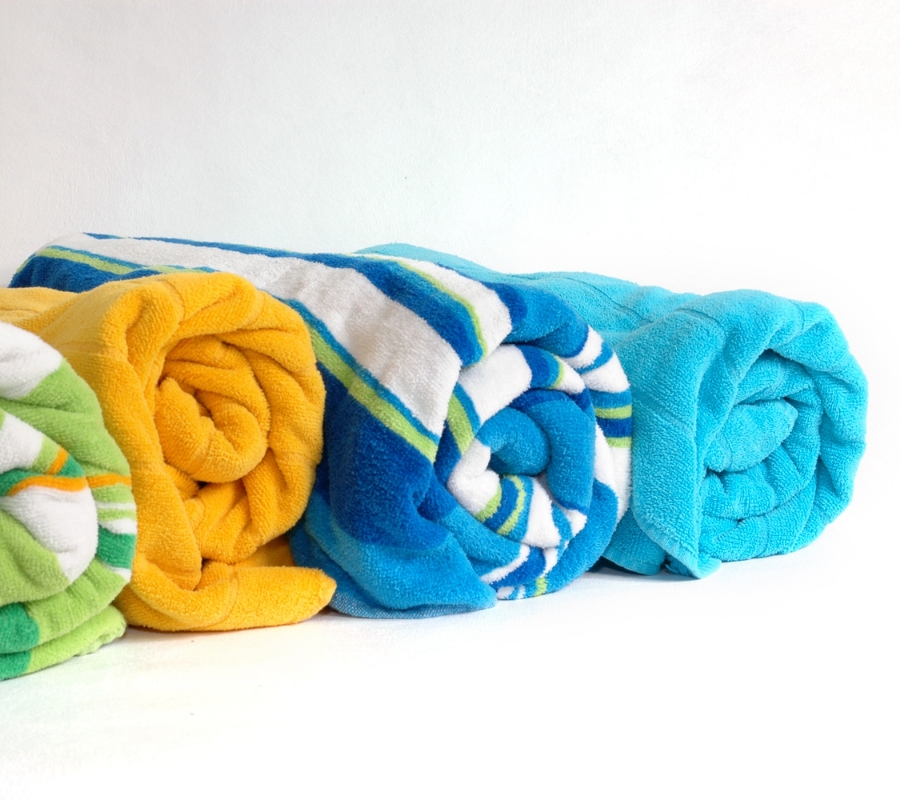
How to get yellow sun cream stains out of towels.
Towels love to soak up sunscreen and because they’re usually bulkier than our clothes, this can make stain removal tougher. Try this:
- Rinse the stain under cold water.
- Pre-treat with smol Stain Gel, as above.
- Soak in a bowl of half warm water and half white vinegar for 1 hour.
- Wash with your smol Laundry Capsule or Laundry Liquid.
- Check the stain. If it’s still visible, repeat before drying.
How to prevent sunscreen stains in the first place.
As always, prevention is better than cure.
- Let sunscreen fully absorb before getting dressed.
- Don’t apply sunscreen while wearing white clothes (apply before you get dressed).
- Use a beach towel/cover up or sarong after reapplying SPF.
- Don’t leave sunscreen-covered clothes in a laundry basket for days.
- Treat visible marks as soon as possible before they have a chance to set.
Remember: sunscreen stains don't have to be permanent.
Act quickly, stick to cooler washes and let a good stain remover do the heavy lifting.
That way you can focus on enjoying the sunshine instead of mourning another SPF casualty.
FAQs: sunscreen stains & how to beat them.

Catherine Green, Cleaning Expert
Catherine has been on a mission to revolutionise the way we tackle chores since the dawn of smol and is an advocate for making more sustainable living accessible to all, with a strong focus in cleaning that’s heavy on dirt, lighter on the planet and gentle on the skin. Catherine has tested hundreds of hacks to make tackling chores easier, safer, and better for the planet and our homes.
ABOUT OUR AUTHORS