06 Oct 2026
- 61% of Brits think “chemical-free” means no chemicals at all.¹
- 47% have paid more for a product because it said “natural”.
- 1 in 3 think “chemical-free” and “non-toxic” have legal definitions.
- 42% think a lower dose is less effective
- The words on a cleaning bottle can make us assume far more than they actually tell us.
Chemical-free. Natural. Non-toxic. Dermatologically tested.
Sounds reassuring.
Our research of 2,000 UK adults found that cleaning claims can lead us into quite a few assumptions about safety or performance or what’s inside a product.
But sometimes our assumptions are wrong. So, it’s time for a translation.
Common cleaning claims.
Cleaning Claim | What we assume | What it actually means |
Chemical-free | No chemicals, so probably safer | Nothing can be chemical-free |
Non-toxic | Certified as harmless | Not a defined UK cleaning standard or any guarantee of zero risk. Anything can be toxic if not used as directed or at the wrong dose, even water. |
Natural | Safer, gentler, better for the planet | Where something came from. Not whether it’s safer, lower in impact or how much is “natural’. |
Dermatologically tested | Will not aggravate skin sensitivities | A product has been patch tested under dermatological review which proves the product is non-irritating. |
Lower dose | Less product, so less cleaning power | Dose alone doesn't tell you how well a formula cleans |
“Chemical-free” sounds safer. But...
It can't exist.
Water is a chemical. Oxygen is a chemical. You are made of chemicals.
Yet 61% of people we surveyed thought “chemical-free” meant a product had no chemicals in it at all, and 41% didn't think water was a chemical.
What we should be asking is: what's in it, why is it in there and how much is being used?

“Natural” sounds good. But is it better?
47% of Brits said they'd paid more for a product simply because it used the word “natural”.
But natural doesn't automatically mean safer, better or lower impact.
Poison ivy is natural. So is arsenic.
Likewise, an ingredient being made synthetically doesn't automatically make it bad.
What matters is the ingredient itself, the amount being used and how you're exposed to it.

“Non-toxic” sounds official. Is it?
This is another phrase that sounds reassuring.
34% of Brits think “non-toxic” has a legal definition in the UK. It doesn’t.
Non-toxic according to what? Used how? What evidence supports the claim?
Any cleaning product sold in the UK must meet strict standards and there are regulations to ensure that when used in the directed way, no product could be toxic. And on the flip side… anything can be toxic at the wrong dose. Even water.

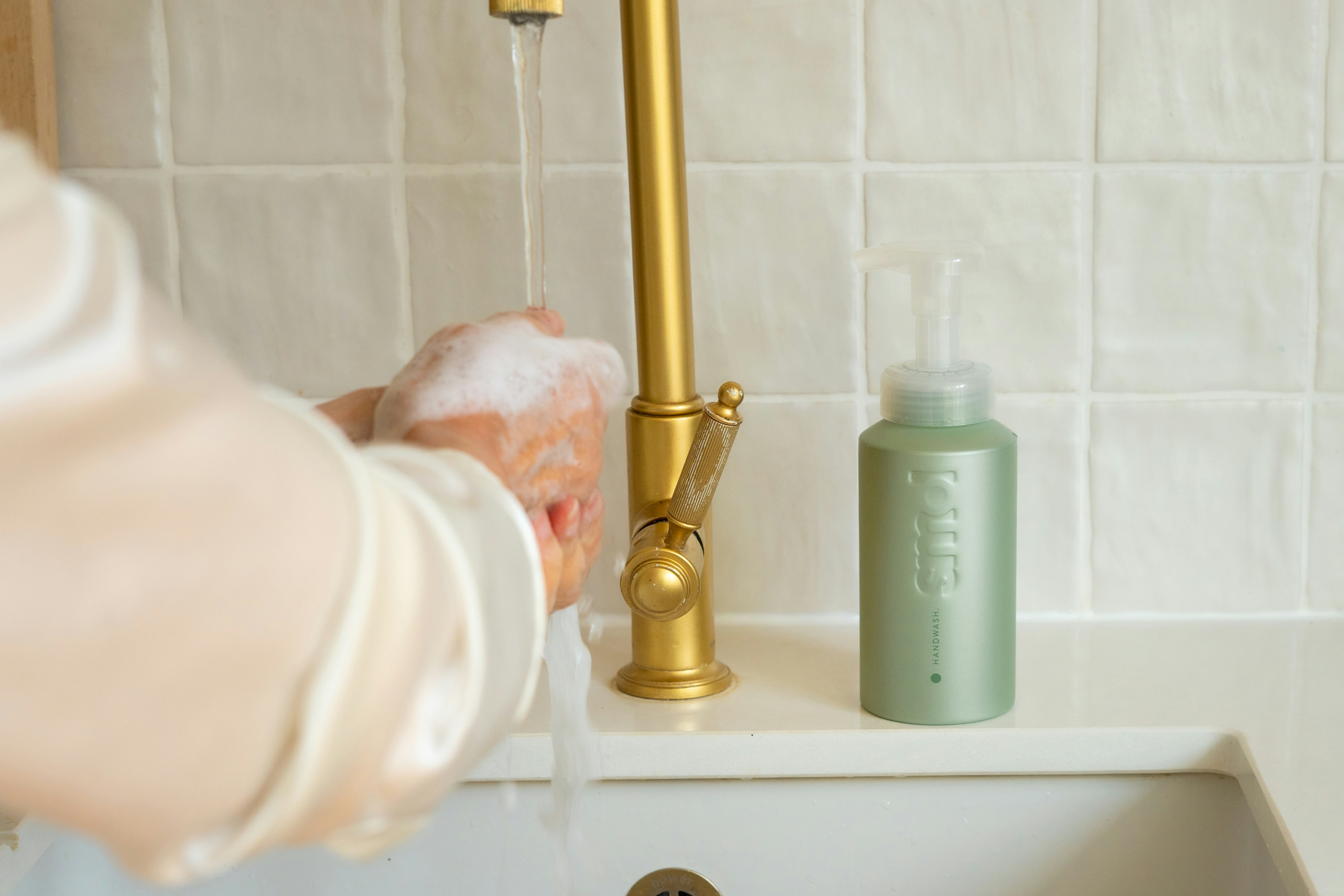
“Dermatologically tested” sounds sciency. But tested how?
38% of people in our survey thought “dermatologically tested” had a legal definition in the UK.
It doesn't, however, have one universal testing standard.
So it’s worth knowing who carried out the testing? What did they test? What was the result? Is there independent accreditation?
At smol, where we make dermatologically tested claims, our relevant products have undergone independent external patch testing. Our sensitive range is formulated to be suitable for sensitive skin, and is dermatologically accredited by the Skin Health Alliance.
“Lower dose” sounds weaker. But more isn't always more.
Surely using more means something will be cleaner?
42% of Brits think lower-dose cleaning products are less effective than higher-dose products.
But cleaning performance depends on the formula, not just the amount of stuff being used.
The right combination of ingredients at the right dose can clean brilliantly without simply chucking more chemical matter at the problem.
This is why at smol we use dry matter testing, then separately test how our products perform.

So, is this cleanwashing?
We use the term “cleanwashing” to describe vague, reassuring or science-sounding cleaning claims that can make a product seem safer or better without showing the evidence behind the claim.
One way to spot cleanwashing is to ask:
- What exactly does this claim mean?
- Compared with what?
- How was it measured or tested?
- Who's backing it up?
- Is there actual evidence behind the words?
If you can't find the answer, it’s worth wondering why...
FAQs about cleaning claims.
¹ Consumer research commissioned by smol through Censuswide among a nationally representative sample of 2,000 UK adults in August 2026. Censuswide is a member of the Market Research Society

Nay Gulsan, Regulatory & Compliance Manager
Nay is smol’s Regulatory Expert, specialising in regulations, safety, formulation and detergent science. She started her journey as a formulation chemist and has since conquered the technical field from toiletries, detergents and home fragrance. A nerdy know-it-all, passionate about doing the right thing, Nay is the expert in this space.
ABOUT OUR AUTHORS