28 Apr 2026
smol home microbiome cheat sheet:
- Your home has its own unique mix of microbes (“microbiome”)
- Most are harmless, some are helpful, only a few can cause problems
- Cleaning removes dirt and harmful bacteria, which is important
- But not everything needs to be completely sterilised all the time
- Overuse of strong or unnecessary chemicals isn’t always needed
- Smarter, targeted cleaning gives a better balance
You’ve probably heard of the gut microbiome, and maybe even your skin microbiome?
But did you know your home has one too?
From kitchen counters to remote controls, your home is a heady mix of bacteria, fungi and other tiny organisms. Together, they make up your home’s microbiome.
Sounds unsettling, but it’s actually totally normal.

What is the home microbiome?
The home microbiome is simply a collection of microorganisms living in your indoor environment. They come from:
- People (from our skin, hands and clothing)
- Pets
- Food
- Outside when we open the doors/windows
Most of these microbes are harmless. Some may even be beneficial. But yes, some can cause illness so it’s a real mix.
Do we need to get rid of it?
Short answer: no.
Longer answer: it needs managing.
So this means that cleaning plays an important role here. It is instrumental in:
- Removing dirt and grease
- Reducing any harmful bacteria
- Keeping your living spaces hygienic
But that doesn’t mean every surface needs to be stripped back to a 100% sterile state, all the time. Because that’s not really how homes (or life) work.
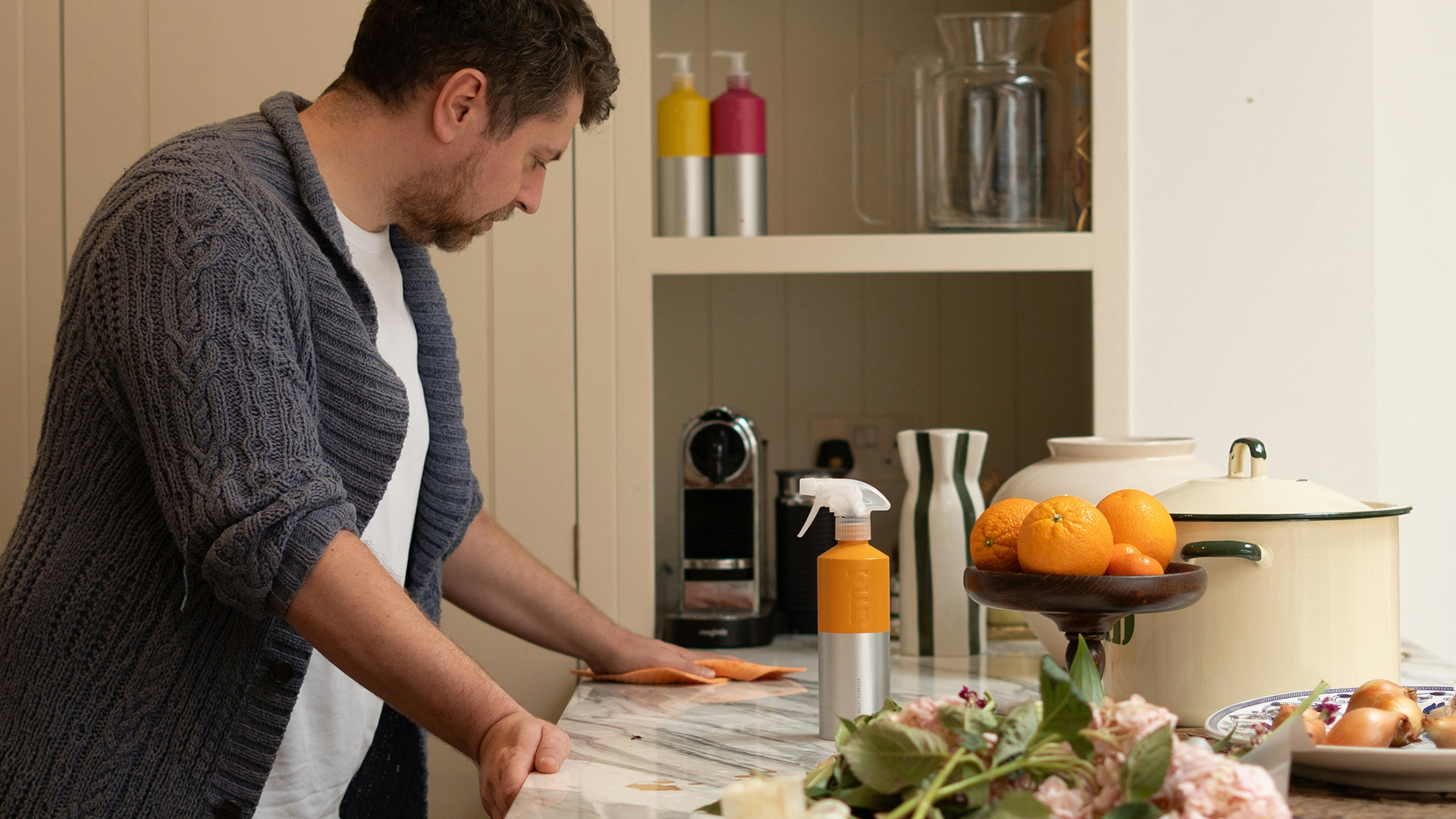
Where cleaning is important.
Good cleaning will remove the things that microbes feed on (like food residue) and therefore reduce levels of any harmful bacteria where it matters (places like kitchens where we prepare food). It will also of course keep your home feeling fresh and a more pleasant place to be!
Cleaning to keep a healthy home microbiome should not mean:
- Overloading every surface with cleaning products
- Using more than the recommended dose
- Sanitising areas like an operating room
Does using more chemicals make a home “cleaner”?
Not necessarily.
Using more of a cleaning product doesn’t automatically improve hygiene. In fact it often just leads to more cleaning residue left behind on surfaces or more stuff to rinse away.
Which brings us back to the fact that dose matters. It’s something we talk about a lot at smol:
Less unnecessary chemicals.
Using less chemical matter isn’t about cleaning less.
It’s about cleaning more efficiently:
- Using products that are properly formulated
- Sticking to the right dose
- Focusing on areas that actually need cleaning
- Avoiding unnecessary extras in your cleaning products
When a product (hello smol!) is designed well, it doesn’t need excess.
What this all means for your home
Embrace balance!
- Regular cleaning where it matters (kitchen, bathroom, high-touch areas)
- Not overdoing it where it doesn’t (every surface, every day)
- Using effective products without overusing them
You don’t need to “sterilise” your home to keep it clean. Here at smol we believe in cleaning that’s effective and not overloaded with unnecessary extras. Our products:
Because at the end of the day your home is not supposed to be microbe-free.
It’s meant to be lived in.
FAQs: the home microbiome

Catherine Green, Cleaning Expert
Catherine has been on a mission to revolutionise the way we tackle chores since the dawn of smol and is an advocate for making more sustainable living accessible to all, with a strong focus in cleaning that’s heavy on dirt, lighter on the planet and gentle on the skin. Catherine has tested hundreds of hacks to make tackling chores easier, safer, and better for the planet and our homes.
ABOUT OUR AUTHORS